


Cosmetic dentistry
See all treatments
Cosmetic dentistry
Hamille Tokyo Dental Office
Asked whether the alignment of their teeth affects first impressions, 20.4% of respondents said yes and 52.2% said somewhat, for a combined 72.6% who saw tooth alignment as important to a first impression.
A survey on attitudes to tooth alignment and orthodontic treatment
Asked whether the alignment of their teeth affects first impressions, 20.4% of respondents said yes and 52.2% said somewhat.
A combined 72.6% saw tooth alignment as important to a first impression, the survey found.
The impression that straight teeth create
Tooth alignment is said to change the impression you make, but how much difference does it really make?
In 2009, a survey on tooth alignment and orthodontic treatment by the Japanese Association of Orthodontists found that 72.6% of respondents said tooth alignment affects first impressions.
- Looks clean
79% - Healthy
78% - Elegant
62% - Well-mannered
54%
3 standards of beauty defined by your teeth
White teeth
As the saying ‘bright eyes, white teeth’ suggests, beauty has long been linked to clear, lovely eyes and white teeth. In psychology, people with white teeth are generally seen as youthful, clean-looking and intelligent. Teeth whitening can give you that white smile.
A beautiful E-line
Viewed side-on, the line connecting the tip of the nose to the tip of the chin is called the E-line. Ideally, the front of the lips sits on this line, or slightly behind it. Correct tooth alignment and bite are essential to achieving that E-line.
A beautiful smile line
The ‘smile line’ is the curve formed by the edges of your teeth when you smile. Shape that line well and you get a beautiful smile. Staff who leave a good impression on customers tend to share one thing: a smile line that curves gently upward at the corners, in a U shape. Try checking yours in a mirror.
Source: Fashion HR
‘Outer beauty starts with beautiful teeth!’
https://fashion-hr.com/hr-talks/hr-talks_real/12663/
A cosmetic dentistry conversation at Hamille
Hamille staff
I’ve heard that teeth have a big effect on first impressions — is that really true?
Kosei Akasaki – Chairman, Hamille Dental Corporation
For people, teeth are everything.
Hamille staff
What do you mean, teeth are everything…?
Kosei Akasaki – Chairman, Hamille Dental Corporation
The Japanese Association of Orthodontists surveyed 1,000 men and women in their 10s to 50s on attitudes to tooth alignment and orthodontic treatment.
Asked whether tooth alignment affects first impressions, 20.4% said yes and 52.2% said somewhat — a combined 72.6% who saw tooth alignment as important to a first impression, the survey found.
Hamille staff
So 72.6% felt tooth alignment matters!
Kosei Akasaki – Chairman, Hamille Dental Corporation
Another survey, on attitudes to personal impressions, found that 70% of people focus on the face when forming a first impression, and more than 40% said they respond well to neat, straight teeth around the mouth.
Tooth colour matters too, not just alignment: more than 20% said they respond well to white teeth. So the state of your teeth clearly has a real effect on the impression you make.
Hamille staff
Straight teeth really can change the impression someone makes!
Kosei Akasaki – Chairman, Hamille Dental Corporation
In many developed countries, judging someone by their teeth is simply normal, which is why so many people abroad have neat, attractive teeth. Being Japanese already tends to create a good impression — so let’s make sure our teeth do too, rather than looking unkempt!
The alarming truth about metal treatment…
Rare in developed countries?
Treating decay with silver restorations
In Europe and the US, beautiful white teeth and a straight smile are seen as valuable — even as a mark of social standing. Poor dental hygiene can hurt job prospects, giving the impression that someone can’t manage themselves, and can even affect sales performance at work. That’s why so many people stay conscious of keeping their teeth healthy and attractive.
In Europe and the US, 98% of dental visits are for prevention and cleaning, and only 2% for treatment. In Japan, by contrast, 98% of visits are for treatment. Hearing ‘Japanese girls are so cute — why do they smile and show dirty teeth?’ is a sad thing to hear.
The risks of silver restorations made from
a gold, silver and palladium alloy
Once you have a silver restoration for tooth decay, each new cavity tends to add another one. Filling and crown materials other than silver are mostly private treatment, so if you stick to what’s covered by public health insurance, it’s common to end up with a mouth full of silver restorations.
What’s called a ‘silver restoration’ in Japan is made from a gold, silver and palladium alloy — a material unique to Japan. It was developed to work with the national health insurance system: cheap, quick to fabricate, and able to restore a tooth’s basic function. But its downsides are now drawing more attention. Below are 3 risks worth knowing about.
The risks of silver restorations
Metal allergies
Tens of billions of bacteria live in the mouth, and a silver restoration faces a harsh environment every day — hot and cold, and the pressure of biting. That makes it prone to wear and damage. Metal ions released from its surface can bind with proteins in the body and trigger a metal allergy.
Palladium, one of the metals in silver restorations, is a particular allergy trigger — around 20 to 30 in every 100 people are said to react to it.
Decay returning under a silver restoration
A silver restoration is bonded to the tooth with dental cement, but strictly speaking, the fit is never perfect. Fitting it simply means filling the gap between tooth and restoration with cement, then holding the two together by friction with the cement.
So it’s not unusual for decay-causing bacteria to get in and spread underneath, bringing the decay back. The cement inside also breaks down over time, and it’s common to find the original tooth completely blackened inside an old silver restoration. Decay under a silver restoration is hard to spot and barely shows up on an X-ray, so it really can go unnoticed for a long time.
Periodontal disease can worsen
Silver restorations scratch easily, and those tiny scratches trap the many bacteria in the mouth. Bacteria linked to periodontal disease, among others, also tend to build up where the restoration meets the gum, so periodontal disease can progress faster once a silver restoration is fitted. Some people find that a back tooth develops swollen gums, or becomes loose from periodontal disease, years after a silver restoration goes in.
Because dirt and bacteria collect so easily around silver restorations, brush as usual but also clean carefully with interdental brushes and floss, and visit the dental clinic regularly for check-ups and cleaning. If bacteria build up where the restoration meets the gum, it can also cause bad breath.
Cosmetic dentistry case studies
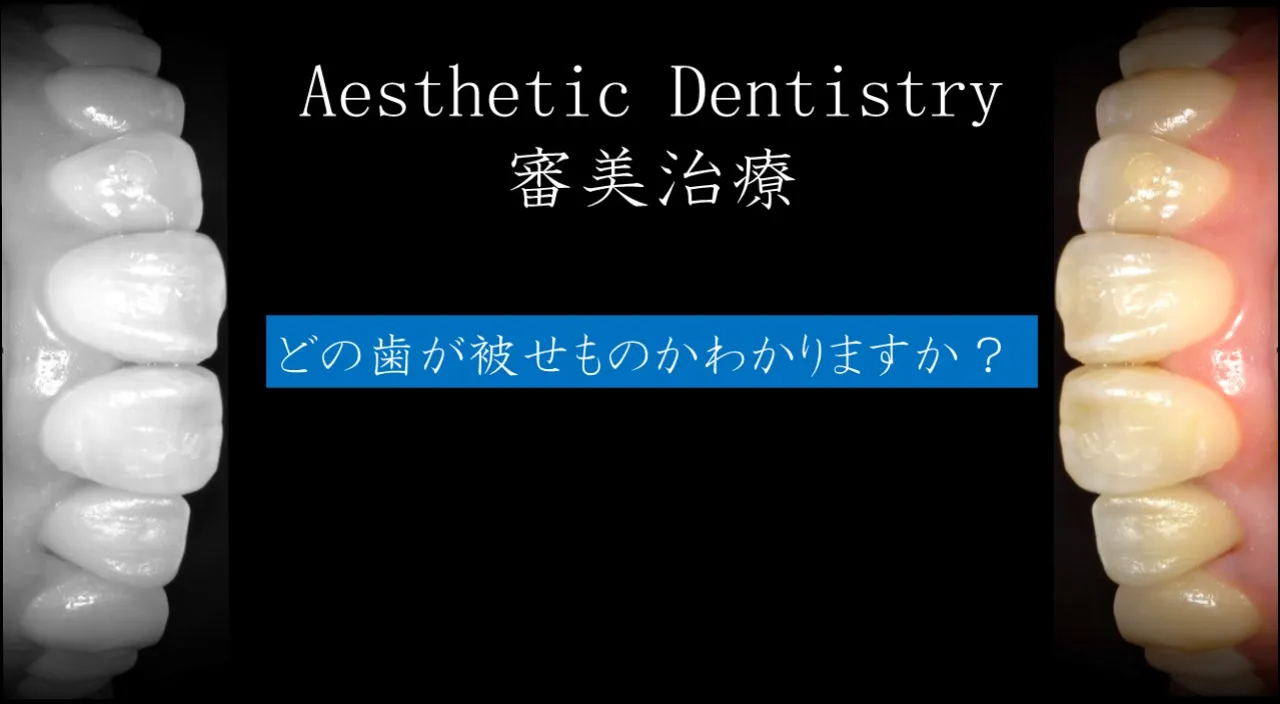
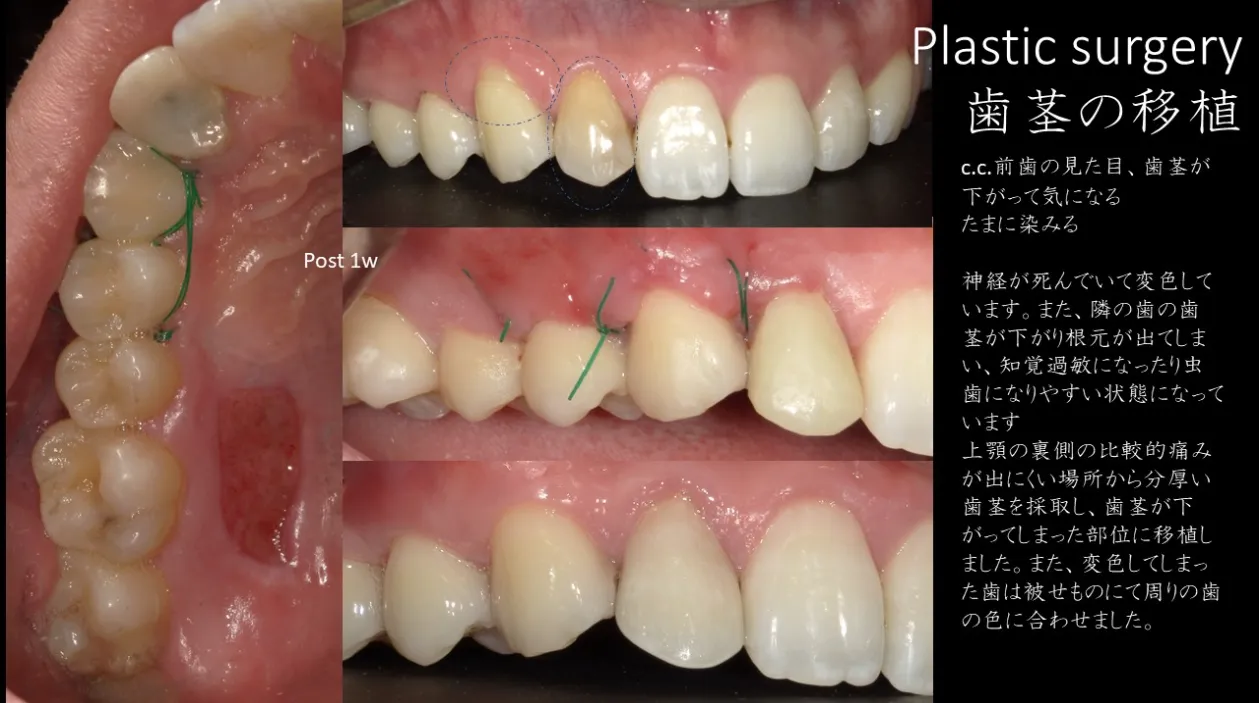
Cosmetic dentistry case study 1: Gum graft
C.C. Concerned about the look of a front tooth; gum recession with occasional soreness
The nerve had died, and the tooth had discoloured. The gum around the neighbouring tooth had also receded, exposing the root and leaving it prone to sensitivity and decay.
We took a thicker section of gum from a less sensitive area on the inside of the upper jaw and grafted it onto the area of recession. The discoloured tooth was restored with a crown matched to the colour of the surrounding teeth.
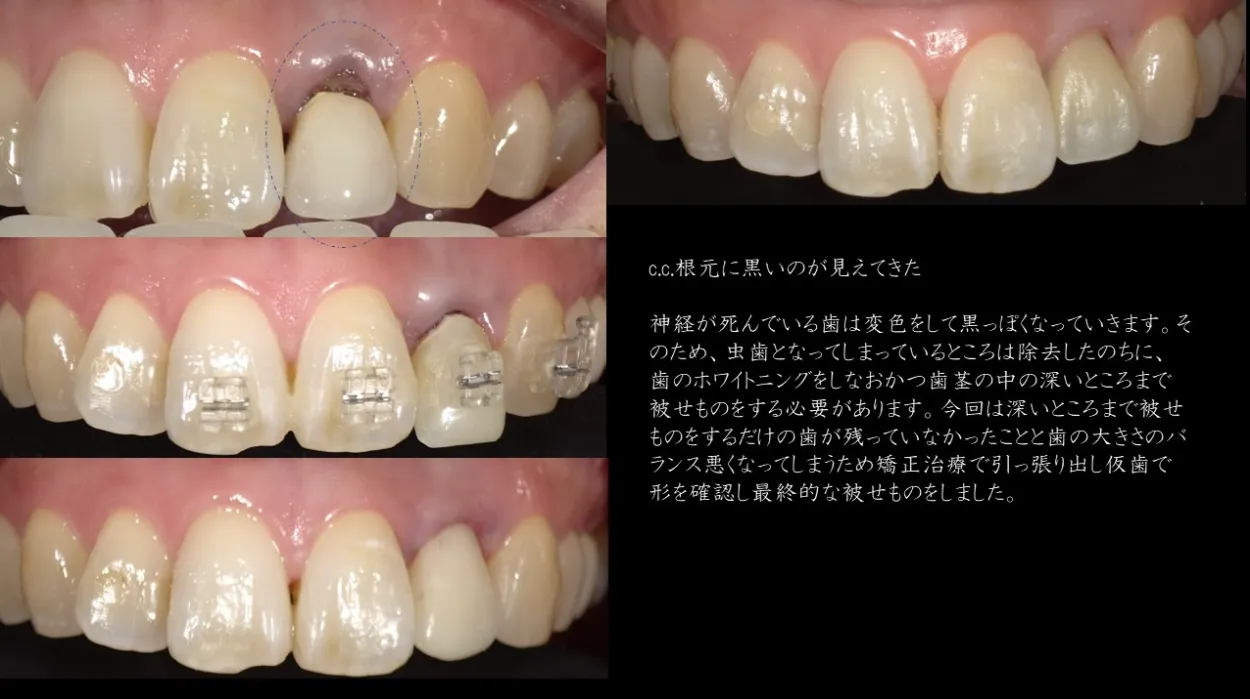
Cosmetic dentistry case study 2
C.C. Noticed blackening near the root
A tooth with a dead nerve gradually discolours and darkens. Treatment meant removing the decayed section, whitening the tooth, and fitting a crown that extended down into the gum. Here, though, not enough tooth structure remained to support a crown margin that deep, and doing so would have thrown off the tooth’s proportions. So we used orthodontic treatment to draw the tooth up, checked the shape with a temporary crown, and then completed the final crown restoration.
Booking and enquiries
